

Due to the dynamically growing demand for highly qualified construction machine operators, telescopic handler courses have gained the status of an indispensable educational element in the construction, agricultural and logistics sectors. A thorough understanding of costs, organization and the significant importance of these trainings constitutes the foundation both for individuals aspiring to professional development and for employers seeking competent and appropriately qualified employees. In this article, we wish to present comprehensive information about course costs, their organization and significance in the contemporary labor market, which will enable readers to make conscious and well-thought-out decisions regarding their professional future.
Introduction to telescopic handler courses – how much does a telescopic handler course cost?
In the face of dynamic changes in the labor market, courses designed for telescopic handler operators have emerged as an extremely important element, especially in such key sectors of the economy as construction, agriculture or logistics. With the growing demand for highly qualified personnel, the question “how much does a telescopic handler course cost?” gains particular significance for people considering further professional development in this field.
The growing popularity of these courses testifies to the increasing interest of both individual professionals building careers and enterprises that increasingly appreciate the importance of having competent operators capable of operating advanced machines. In the further part of this article, we will examine in detail:
- Various types of telescopic handlers and the wide spectrum of their applications in different industries.
- The key importance of training for operators in the construction and agricultural sectors.
- Costs associated with course participation and their comparison across different training centers.
- Various centers offering telescopic handler courses, their offerings and service quality.
- The validity of held certificates in the recruitment process and their impact on employment.
- Professional prospects and employment opportunities that open up after completing the course.
What are telescopic handlers?
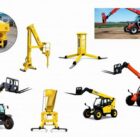
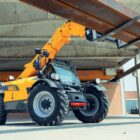
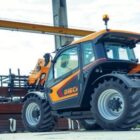
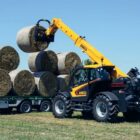
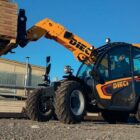
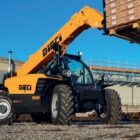
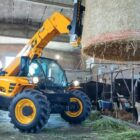
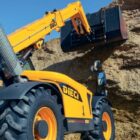
Telescopic handlers constitute specialized machines used in various industry sectors, playing a key role in transport and precise lifting of loads at significant heights. Thanks to an innovative variable reach system, these advanced devices are characterized by extraordinary versatility, enabling the handling of even the most demanding tasks related to transporting large loads.
Below we present key features distinguishing telescopic handlers:
- Extensibility – enables adjusting the boom length to specific operational needs, which increases the efficiency of performed tasks.
- Multifunctionality – allows the use of telescopic handlers in various tasks, from simple material transport to complex construction work requiring precise operations.
- High load capacity – the ability to handle large loads makes these handlers indispensable in many industries where efficient manipulation of heavy materials is required.
Importance of telescopic handler courses in the construction and agricultural industries
Telescopic handler operators play an extremely important role in sectors where their skills are not only desired but absolutely necessary for the smooth functioning of entire operational processes.
Proper training directly affects work efficiency and safety, which in turn translates to increased productivity and minimization of the risk of workplace accidents. Below we present key benefits resulting from completing the course:
- Increased employment opportunities – having specialized skills significantly increases candidates’ attractiveness in the labor market.
- Raising workplace safety standards – proper training ensures that operators can operate machines safely and in accordance with applicable standards.
- Ability to operate modern machines – courses prepare for work with the latest telescopic handler models equipped with advanced control systems.
Telescopic handler course costs – how much does a telescopic handler course cost?
Currently, the cost of a telescopic handler operator course ranges from 1100 PLN to 1400 PLN, depending on the chosen training center, location and scope of offered educational services.
| Training Center | Course Cost (PLN) |
|---|---|
| ERGON | 1200 |
| RIWAL | 1350 |
| CLASSIC | 1100 |
| ATC Grupa | 1400 |
It’s worth noting the components included in the course costs, which comprise:
- Theoretical and practical materials, providing comprehensive knowledge necessary for effective operation of telescopic machines.
- Final examination and certification, which confirms acquired skills and is a required document in many workplaces.
- Access to modern simulators, which enable practical skill practice in controlled conditions before the real work environment.
Average cost of a telescopic handler operator course
The average course price is approximately 1250 PLN, which represents an attractive offer for many workers wanting to acquire new skills. This investment in education directly translates to better professional prospects and increases competitiveness in the labor market.
The following chart illustrates differences in course costs offered by different centers:
Why is it worth investing in training?
The decision to invest in a telescopic handler operator course brings a number of benefits, such as significantly increasing employment chances and access to better-paid job offers. Completing the course represents a step towards a stable and satisfying professional career along with the possibility of achieving higher income.
- Increasing employee market value – having a telescopic handler operator certificate makes a candidate more attractive to potential employers.
- Raising industry standards – qualified operators contribute to improving the overall level of safety and efficiency in the workplace.
- Expanding operational skills – training enables acquiring advanced skills that are highly valued in various industry sectors.
Comparison of costs across different training centers
Telescopic handler operator course costs can vary significantly depending on the chosen training center. Therefore, it’s worth conducting thorough market research to choose the most favorable option that will meet individual needs and expectations of course participants. Differences may concern not only price but also the quality of offered educational materials, equipment availability or the level of support from instructors.
| Location | Center | Course Cost (PLN) |
|---|---|---|
| Warsaw | OSO | 1300 |
| Łódź | JGL Logistics | 1150 |
| Szczecin | ATC Grupa | 1400 |
Training centers offering telescopic handler courses – how much does a telescopic handler course cost?
Many training centers are available on the market that offer specialized telescopic handler courses, responding to the growing demand for qualified operators. Below we present several of them that stand out with their offer and quality of provided educational services:
- ERGON – Offers comprehensive training, focusing mainly on developing practical operator skills, which allows for quick and effective preparation for field work.
- RIWAL – Specializes in intensive courses that prepare course participants for independent work in a short time, making them an ideal solution for people seeking quick entry into the labor market.
- CLASSIC – Offers a wide range of courses at attractive prices, making their offer accessible to a broad group of potential course participants.
- ATC Grupa – Enjoys an excellent reputation for high teaching quality and professional approach to each course participant.
- OSO and JGL Logistics – Offer interesting training programs that attract course participants with their modern approach and flexibility in adapting to participant needs.
Overview of popular centers in Poland
In key Polish cities, there are many renowned training centers that offer advanced telescopic handler training. Here is a list of the most popular ones that enjoy trust and positive user reviews:
- Warsaw – Many centers with rich course programs are located here, offering various training options adapted to the needs of both beginner and advanced operators.
- Gliwice – This city is also home to numerous training centers that stand out with high teaching standards and modern training methods.
- Szczecin – Offering courses in various forms, from traditional theoretical classes to practical field workshops, they provide comprehensive preparation for work as a telescopic handler operator.
Training programs and educational materials
Training centers strive to offer programs that harmoniously combine theory with practice, enabling course participants not only to acquire necessary theoretical knowledge but also practical skills essential for effective work on telescopic handlers. Among available educational materials are:
- Theoretical textbooks that provide detailed knowledge about machine operation and principles of their safe operation.
- Video materials that visually present various operational scenarios and techniques for working with telescopic handlers.
- Simulators that allow practical operation practice in a controlled environment, which significantly facilitates learning and prepares for real working conditions.
An integrated training program combining theoretical knowledge with practical skills enables course participants to better prepare for their professional duties, which significantly increases their chances of success in future work.
The role of UDT in the certification process
The Technical Supervision Authority (UDT) plays a key role in the operator certification process, ensuring that certificate holders meet specific competency and safety standards. This process includes several important steps that are necessary to obtain formal qualifications:
- Completing a course at a certified training center that offers programs compliant with UDT requirements.
- Taking an exam organized by UDT, which tests both theoretical knowledge and practical skills of the course participant.
- Receiving a certificate that is valid for 3 to 5 years, after which renewal is necessary through participation in additional refresher courses.
Importance and types of certificates – how much does a telescopic handler course cost?
Having appropriate certificates, such as a telescopic handler operator certificate, is indispensable for people planning a career in this dynamically developing industry. This certificate not only confirms the operator’s skills but also significantly increases their chances for attractive job offers in various industry sectors.
Benefits of having a certificate include:
- Ability to operate various telescopic handler models, which increases flexibility and operator value in the labor market.
- Better competitiveness in the labor market, enabling employment in renowned companies and more advanced projects.
- Higher earnings related to possessed skills, making the certificate an investment in professional and financial development.
What qualifications does having a certificate provide?
A telescopic handler operator certificate significantly increases professional opportunities, opening wide career paths in various economy sectors for the holder. Key qualifications provided by having a certificate include:
- Operating telescopic handlers from various manufacturers, allowing work with a wide range of machines available on the market.
- Working in various environments, including construction, warehouse and logistics sectors, where telescopic handler application is crucial.
- Possibility of obtaining higher management positions that require not only machine operation but also team management and work coordination on a larger scale.
Certificate validity and renewal requirements
A telescopic handler operator certificate is valid for 3-5 years, after which renewal is necessary through participation in refresher courses. This process is essential for maintaining current knowledge and operator skills, which is crucial in the context of continuous development of construction and agricultural machine technology. Regular certificate renewal contributes to further professional development and ensures employment continuity at a high level.
- Completing a refresher course that updates and expands the operator’s existing knowledge.
- Taking an exam that confirms acquired skills and knowledge.
- Obtaining a new certificate that is a continuation of the previous one and enables further work as a telescopic handler operator.
Employment and career prospects after completing the course – how much does a telescopic handler course cost?
Certified telescopic handler operators can count on a wide range of employment opportunities in various industries, making this career path extremely attractive. Key sectors where certified operators can find employment include:
- Construction
- Agriculture
- Logistics and warehousing
Demand for telescopic handler operators
Poland records high demand for telescopic handler operators, resulting from dynamic development of the construction, agricultural and logistics technology sectors. Statistics show significant employment growth in this profession in recent years, making completion of operator courses an extremely profitable undertaking for people wanting to increase their chances of stable employment. For example:
- In the construction sector, a 30% increase in employment of telescopic handler operators was recorded, which is the result of developing new construction projects and modernizing existing facilities.
- In agriculture, over the last two years, a 25% increase in operator employment was observed, resulting from the need for efficient management of large crop areas and crop transport.
Employment opportunities in various industries
Certified telescopic handler operators have the opportunity to find employment in many different economy sectors, which significantly increases their flexibility in the labor market. Examples of available positions include:
- Handler operator in the construction sector, responsible for material transport and preparing the construction site for further work.
- Logistics department employee, dealing with goods transport management in warehouses and distribution centers.
- Agricultural material transport specialist, responsible for efficient movement of crops and agricultural materials for production needs.
How does the course increase chances for better earnings?
Having a telescopic handler operator certificate has a significant impact on potential earnings, as operators with formal qualifications achieve on average 20-30% higher salaries compared to those who do not have certification. Below we present main financial benefits related to certification:
- Access to more attractive job offers that often provide higher salaries for certified operators.
- Higher salaries resulting from advanced skills and greater responsibility in the position.
- Possibility of career advancement, opening doors to higher management positions and specialized roles in companies.
Investment in professional development is extremely important, especially in industries characterized by high demand for qualified workers. Therefore, it’s worth deciding on telescopic handler operator courses, which not only increase competencies but also open doors to many new professional opportunities.
When deciding on a telescopic handler operator course, it is extremely important to carefully consider choosing an appropriate training center that not only offers competitive prices but also guarantees a high level of education quality and provides access to modern technologies and advanced simulators. Choosing a renowned institution significantly increases confidence that acquired skills will comply with current industry standards, and the obtained UDT certificate will be widely recognized by employers throughout the labor market. Moreover, participation in courses conducted by experienced and qualified instructors enables more effective acquisition of practical knowledge, which consequently translates to faster adaptation and better preparation for professional challenges in a dynamic work environment.