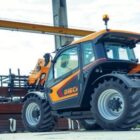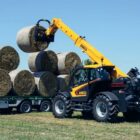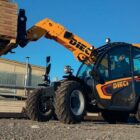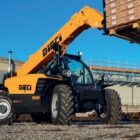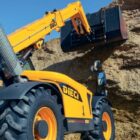


How Much Does a Telescopic Loader Weigh: Introduction
Telescopic loaders, more widely known as telehandlers, are extremely versatile machines that have found wide application in various industry sectors, such as construction and agriculture. A key aspect of these machines is their weight, which plays an important role in the context of mobility, stability, and operational safety. This article aims to provide a detailed discussion of issues related to the weight of telescopic loaders and analyze their impact on daily use in professional practice, answering the question: how much does a telescopic loader weigh?
Definition of telescopic loader and its weight
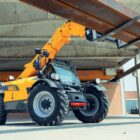
A telescopic loader is an advanced technological construction device equipped with a telescopic boom that enables reaching significant heights and efficiently transporting various loads. Characteristic models are distinguished by weight ranging from 3 to 5 tons, while lighter variants may weigh less than 3 tons. The machine’s weight has a direct impact on its load capacity and maneuverability, which is crucial in daily operations. Elements determining the loader’s weight include construction materials used, engine power, and various accessories. Therefore, understanding how much a telescopic loader weighs is important for every user.
| Model | Weight | Load Capacity |
|---|---|---|
| Light loader | 2.5 t | 1.5 t |
| Standard loader | 3.5 t | 2.5 t |
| Heavy loader | 5 t | 4 t |
History of telescopic loaders and their weight
Since the introduction of telescopic loaders to the market, these machines have undergone numerous technological innovations that significantly influenced their characteristics. In the early years of use, the large weight of telescopic loaders limited their mobility, posing a significant challenge for operators. However, with technological progress and the application of modern materials, manufacturers were able to introduce solutions reducing loader weight without compromising their performance. Key moments in the history of telescopic loaders include:
– 1990: Introduction of the first commercial telescopic loader models.
– 2000: Implementation of technological improvements enabling device weight reduction.
– 2010: Debut of lightweight models that significantly increased the popularity of telescopic loaders in the market.
Application of telescopic loaders in various industries and their weight
Telescopic loaders find wide application in many industries, such as:
– Construction: Requires the use of loaders with appropriate weight for transporting valuable construction materials, while ensuring stability during lifting operations.
– Agriculture: Machine weight is crucial in the context of maneuvering in difficult, often uneven terrain, which affects work efficiency.
– Transport: Equipment weight determines its ease of movement between different work locations, which is an important logistical factor.
The weight of a telescopic loader has a significant impact on its functionality. Models with greater weight offer better stability, but may be less convenient for transport and maneuvering, which requires careful consideration when choosing the appropriate equipment for specific industry needs.
How Much Does a Telescopic Loader Weigh: Weight of Telescopic Loaders
Increasing operational efficiency and ensuring effective equipment transport are crucial issues in the context of telescopic loader use. Below we present more detailed data regarding the weight of these machines and their impact on daily use.
Average weight of telescopic loader
The average weight of modern telescopic loaders oscillates within the range of 3 to 5 tons. It’s worth noting that increased engine power often correlates with increased machine weight, which usually requires the use of more durable construction materials to maintain an appropriate level of performance.
Why weight is important in the context of application
The weight of a telescopic loader affects several key operational aspects:
– Mobility: Lighter models are characterized by greater maneuverability and ease of transport, which is extremely important in dynamic work environments.
– Stability: Heavier machines provide better stability when lifting loads, which translates to increased operational safety.
– Operational efficiency: Lighter equipment can contribute to increased efficiency through reduced energy consumption, which is beneficial both from the perspective of operational costs and environmental protection.
Key technical parameters
The most important technical parameters of telescopic loaders include:
– Engine power: Range from 75 to 120 kW, which directly affects overall performance and the machine’s ability to perform various tasks.
– Load capacity: Closely related to equipment weight, defines the maximum weight of load that can be safely lifted and transported.
– Lifting range: Crucial for operational efficiency, determines the maximum height to which you can lift a load, which is important in various industrial applications.
| Parameter | Value |
|---|---|
| Power | 100 kW |
| Load Capacity | 3 t |
| Range | 6 m |
Impact of construction on telescopic loader weight
The diversity of construction in modern telescopic loaders enables effective weight reduction of equipment without compromising their rigidity and stability. Innovative materials, such as aluminum alloys and composites, allow for significant machine weight reduction while maintaining high strength standards, which translates to increased efficiency and work safety.
How Much Does a Telescopic Loader Weigh: Model Examples
Most frequently chosen models in Poland
In the Polish telescopic loader market, there is growing interest in models that are distinguished by an optimal weight-to-performance ratio. The most frequently chosen models are characterized by the following parameters:
– Model X: Weight 2.5 t, load capacity 1.5 t.
– Model Y: Weight 3.5 t, load capacity 2.5 t.
– Model Z: Weight 4.5 t, load capacity 3.5 t.
How Much Does a Telescopic Loader Weigh: Impact of Weight on Usage
Ease of transport depending on weight
Transporting a telescopic loader to a construction site or other workplace is a process that largely depends on the machine’s weight. Lighter models are characterized by greater ease of transport, allowing for faster movement between different work locations, thereby increasing operational efficiency.
Importance of weight for stability and safety
Equipment weight directly affects its stability during work. Heavier telescopic loaders provide better balance, which reduces the risk of machine tipping in difficult terrain conditions. Increased stability is essential for ensuring operator safety and people in the vicinity, which is crucial in any work environment.
Application and work efficiency
Choosing the appropriate weight of telescopic loader has a significant impact on the efficiency of performed tasks. Lighter models work excellently in narrow spaces, enabling precise operations in limited work areas. On the other hand, heavier machines offer greater load capacity and stability, which is invaluable in intensive construction work requiring lifting of heavy loads.
How Much Does a Telescopic Loader Weigh: Market Trends in Poland
Evolution of the telescopic loader market in Poland
The telescopic loader market in Poland is developing dynamically, reflecting growing demand for versatile and efficient machines in construction and agricultural sectors. Increasing availability of modern models with optimized weight and advanced technological features contributes to increased popularity of these devices in the local market.
Weight as a factor in consumer purchasing decisions
In the purchasing decision process, the weight of telescopic loader plays an important role. Consumers increasingly analyze machine weight in the context of their specific operational needs and working conditions, allowing for conscious selection of equipment best suited to required tasks.
Impact of prices on model selection in the context of weight
The price of telescopic loaders often correlates with their weight. Models with greater weight usually involve higher costs, but their increased performance and load capacity can justify this price difference, especially in the case of intensive operations requiring greater transport capabilities.
In summary, the weight of telescopic loaders is a fundamental aspect that should be considered when choosing the appropriate model. Properly selected weight affects operational efficiency, mobility, and machine stability, which consequently translates to success in implementing various projects in many industries.
Most important information in the article:
- The average weight of modern telescopic loaders ranges from 3 to 5 tons, which crucially affects their mobility, stability, and operational safety.
- Telescopic loaders are widely used in construction, agriculture, and transport sectors, where their weight determines work efficiency and ease of maneuvering.
- Technological progress has enabled weight reduction of loaders without loss of performance, which increased their popularity since the introduction of lightweight models in 2010.
- Available models differ in weight: light loaders weigh about 2.5 tons, standard 3.5 tons, and heavy up to 5 tons, which translates to their load capacity from 1.5 to 4 tons.
- Key technical parameters include engine power (75-120 kW), load capacity, and lifting range, which are closely related to equipment weight.
- Example models popular in Poland are Model X (2.5 tons, 1.5 tons load capacity), Model Y (3.5 tons, 2.5 tons) and Model Z (4.5 tons, 3.5 tons).
- Construction from modern materials, such as aluminum alloys and composites, allows for loader weight reduction while maintaining their strength and stability.
- Telescopic loader weight affects consumer purchasing decisions, where lighter models are preferred for ease of transport, while heavier ones offer greater stability and load capacity.
- The telescopic loader market in Poland is developing dynamically, with growing demand for machines with optimized weight and advanced technological features.