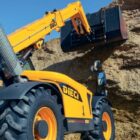


Permits for operating telescopic loaders constitute the foundation for every operator aspiring to work in the construction or agricultural sector, and knowledge of requirements and available courses plays a key role in ensuring both safety and efficiency of operations using specialized equipment; in this article we will discuss in detail what qualifications are necessary, which courses are worth considering and what significance certificates have in the dynamically developing industry, providing the reader with comprehensive knowledge necessary to achieve success in this field.
What is a telescopic loader?
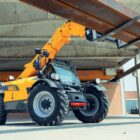
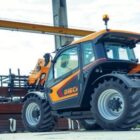
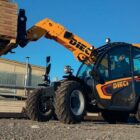
A telescopic loader, commonly known as a versatile construction tool, was designed with efficient transport and lifting of various materials in mind, which is possible thanks to its telescopic boom that significantly increases the reach and working depth of this device. This equipment finds wide application in many industry sectors, such as construction, agriculture or transport, thanks to its flexibility and adaptability to different working conditions.
Main applications of telescopic loaders include not only material transport on construction sites, but also loading and unloading goods, carrying out earthworks and supporting agricultural activities, making it an indispensable tool in operators’ daily work.
The distinguishing feature of telescopic loaders is versatility, which allows for easy attachment exchange, significantly increasing their capabilities in performing various tasks, and obtaining appropriate telescopic loader permits becomes a key element for operators who must understand and meet the legal requirements in this area.
Definition and applications
A telescopic loader integrates the functions of a traditional loader, forklift and crane, making it an extremely versatile tool used in key industries such as:
– Construction, where loaders serve to transport raw materials and construction materials on construction sites,
– Agriculture, supporting work on farms by moving hay and other materials,
– Transport, enabling efficient delivery of materials to hard-to-reach places.
Examples of practical applications include loading concrete on construction sites, lifting containers with agricultural materials or supporting work in road and bridge construction, which emphasizes their important role in various infrastructure projects.
Versatility and equipment capabilities
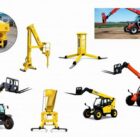
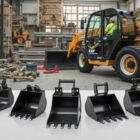
Telescopic loaders can be additionally enhanced with various attachments, which significantly increases their functionality and enables the execution of more complex tasks. Attachments can include pallet forks, earth buckets, hooks for lifting heavy elements or equipment for transporting tanks, allowing for quick adaptation of the machine to a specific type of work.
Thanks to the use of a telescopic boom, more efficient packing and manipulation of materials in places with limited space is possible, which is invaluable on tight construction sites or in dense farms. Telescopic loaders perform many tasks simultaneously, making them an indispensable tool in the construction and agricultural sector, offering such benefits as increased work efficiency, reduced task completion time and the ability to operate in difficult terrain conditions.
Requirements for telescopic loader permits
To be able to efficiently and safely operate telescopic loaders, it is necessary to have appropriate telescopic loader permits in accordance with current legal regulations. Operators must undergo specialized training and obtain certificates confirming their competences, which is crucial for ensuring compliance with safety standards and increasing professionalism in the workplace.
Answering the question what permits for telescopic loader are needed, the following key requirements can be distinguished:
– Completed operator course, which provides thorough theoretical and practical knowledge,
– Successfully passing theoretical and practical exams, which confirms the ability to operate the machine,
– Current medical examinations, guaranteeing the ability to perform this type of physical work.
Regular updating and renewal of telescopic loader permits is also important, as certificates issued by UDT are valid for 5 years, after which operators must take steps to extend them, which usually includes participation in additional courses and passing subsequent exams.
Who can operate telescopic loaders?
To be able to efficiently operate a telescopic loader, operators must meet specific requirements, which include:
– Completing an appropriate course for operators, which is often offered by certified training centers,
– Having skills and experience in equipment operation, which allows for quick and safe task execution,
– Ability to take on both theoretical and practical challenges, which is necessary in dynamic working conditions.
Required documents include certificates of completed courses and health examination results, which confirm the operator’s ability to work with heavy equipment.
Why are permits important?
Having appropriate telescopic loader permits brings many important benefits, such as increased safety when working with heavy equipment, reduced risk of accidents and compensation, as well as protection against legal consequences resulting from not having required permits. The safety of operators and the environment is a priority, and qualified workers contribute to limiting potential hazards, which makes permits crucial when lifting and moving heavy objects is required.
How long are UDT permits valid?
Permits issued by the Technical Supervision Office (UDT) have a specified validity period of 5 years. To obtain a certificate, operators must go through the entire training process, including both theoretical courses and practical exams. After the certificate expires, operators are required to renew their telescopic loader permits, which may include completing a supplementary course and retaking practical and theoretical exams, ensuring continuous development of operator competences.
Regular supplementary courses are required, which not only allows for extending certificate validity, but also contributes to constant improvement of operator qualifications, which is necessary in the dynamically developing industry.
Courses for telescopic loader operators
Preparing to work as a telescopic loader operator, it is worth paying attention to the wide range of courses available at various training centers, which are adapted to different levels of participant experience. These courses are divided into basic and advanced, depending on the required level of knowledge and skills.
Types of courses include:
– Basic courses, intended for beginners who have no previous experience in operating telescopic loaders,
– Specialized courses, focused on specific equipment model operation, allowing operators to acquire skills necessary to operate specific types of machines.
Familiarizing yourself with the curriculum and requirements for participants is crucial for acquiring appropriate skills that are necessary for safe and efficient work as an operator.
Types of courses available in Poland
Training centers in Poland offer various types of courses for future telescopic loader operators, which can include both theoretical training on safety principles and equipment operation, as well as practical training enabling skill acquisition in real working conditions. These programs often include:
– Detailed discussion of safety principles and operational procedures, which are necessary to minimize accident risk,
– Practical exercises that allow direct application of acquired theoretical knowledge in practice, which is crucial for efficient equipment operation.
It is worth paying attention to course duration and teaching intensity to choose a program that best meets individual participant needs and capabilities.
Organizations responsible for issuing permits
Issuing telescopic loader permits is the task of several key organizations that play an important role in ensuring high standards of training and operator certification. The most important ones include:
– Technical Supervision Office (UDT), which is responsible for operator certification and supervision of safety standard compliance,
– Institute of Construction and Rock Mining Mechanization (IMBIGS), supporting training and operator certification, which is crucial for maintaining high professional qualification levels in the construction and mining sector.
Cooperation between these organizations and training centers is necessary to ensure that telescopic loader operators are properly prepared to perform their duties in accordance with applicable standards.
Technical Supervision Office (UDT)
UDT plays a key role in safety supervision and regulation of issuing telescopic loader permits. This organization is responsible for:
– Issuing certificates for operators, which are necessary for legal and safe work with heavy equipment,
– Conducting audits and safety controls to ensure that operators meet all required standards.
Every operator must meet rigorous requirements set by UDT, which guarantees a high level of safety and professionalism in the industry.
Institute of Construction and Rock Mining Mechanization (IMBIGS)
IMBIGS supports the construction and mining sector by coordinating training and certification of telescopic loader operators. Main services offered by IMBIGS include:
– Development of training programs that are adapted to the latest industry standards and requirements,
– Issuing permits and organizing training that provides operators with necessary knowledge and skills for efficient work.
Their importance for the construction market is extremely significant, as they contribute to raising professional qualifications of operators and increasing safety on construction sites.
WJO permits and their significance
WJO (lift trucks) permits have wide application and are necessary for operating telescopic loaders. They include:
– Safety principles and operational procedures in contact with trucks, which are crucial for minimizing accident risk,
– Requirements regarding operator experience and qualifications, ensuring that only properly prepared workers can operate heavy equipment.
Having these permits is crucial for maintaining legality and work safety in various industry sectors where telescopic loaders are used.
Practical examples and use cases
Telescopic loaders enjoy wide recognition for their extremely versatile applications, which contribute to increased work efficiency in many sectors.
Application of telescopic loaders in the construction industry
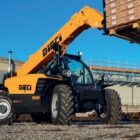
Particularly in the construction industry, telescopic loaders constitute an indispensable tool, enabling transport of construction materials on construction sites and effective loading and unloading, which translates into significant time savings and increases efficiency of implemented projects, and operators can focus on optimizing construction processes thanks to capabilities offered by modern telescopic loader models.
Role of telescopic loaders in agriculture
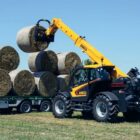
In agriculture, telescopic loaders support various operations that are important in daily farm work, such as moving hay, operating irrigation equipment or transporting other materials, which contributes to increasing field work efficiency and enables farmers to manage resources more effectively.
In summary, obtaining appropriate permits to operate telescopic loaders constitutes not only a key element guaranteeing legality of actions in the construction or agricultural sector, but above all a foundation ensuring the highest level of safety at every construction facility or farm. Cooperation with renowned institutions such as UDT or IMBIGS provides operators with access to the latest information and necessary skills that enable efficient and safe operation of advanced equipment. In the face of dynamic technology development in construction and agricultural industries, continuous improvement of competences becomes indispensable, which is possible thanks to regularly organized courses and training offered by certified educational centers.