

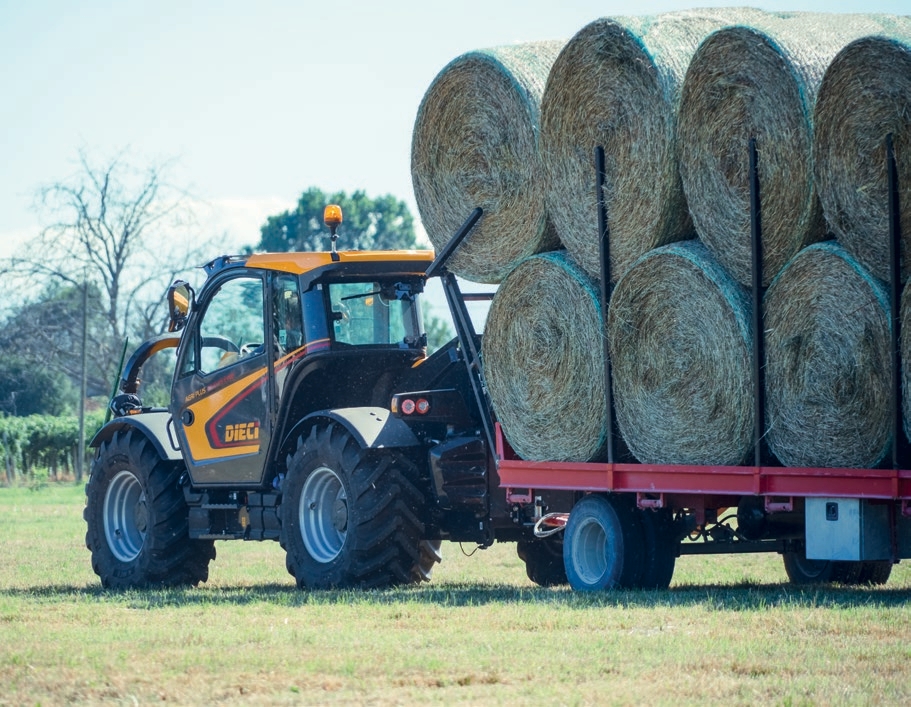
The smallest telescopic handler represents an exceptionally compact solution that skillfully combines the functionality of traditional loaders with the advantages of forklifts, while offering impressive lifting capacity and significant lifting capabilities. Its distinguishing feature is its small dimensions, which do not negatively affect its solidity and durability, making it extremely valued in the dynamically developing construction and agriculture sectors. In the face of growing market needs, this versatile machine perfectly adapts to diverse requirements, which is reflected in its increasing popularity.
In this article, we will examine the definition of the smallest telescopic handler, thoroughly discuss its key functions and wide applications, and delve into the technical aspects of this equipment. We will focus on its impact on increasing work efficiency, especially in limited spaces, and on the benefits it brings to various industry sectors. By analyzing important parameters such as lifting capacity, lifting height, and drive type, we will strive to provide information that will help in choosing the appropriate model tailored to users’ specific needs.
What is the smallest telescopic handler?
The smallest telescopic handler is specialized equipment designed for efficient lifting and transporting of various materials, characterized by compact dimensions that enable work in places where traditional, larger machines encounter limitations. Thanks to its construction, this smallest telescopic handler is able to operate in narrow spaces while providing solidity and reliability, making it indispensable in many industrial applications.
Basic functions of the smallest telescopic handlers include:
- continuous lifting and transport of materials in various sectors, from construction to agriculture,
- possibility of using various attachments, such as forks, grabs or buckets, which significantly increases their versatility,
- ability to work efficiently on uneven terrain thanks to low center of gravity and advanced technical solutions.
The most important technical features defining the smallest telescopic handler models are:
- lifting capacity ranging from 800 kg to 2.7 tons,
- lifting height reaching from 4 to 6 meters,
- various drive systems, including advanced hydrostatic drives, which increase comfort and precision of use.
Why are the smallest telescopic handler models popular?
The growing popularity of the smallest telescopic handlers results primarily from their unmatched versatility, efficiency, and wide application possibilities in various industries. Thanks to their compact size and advanced functions, this smallest telescopic handler becomes an indispensable element of equipment both on construction sites, in farms, and in other sectors requiring precise and efficient operation.
Main benefits resulting from using the smallest telescopic handlers are:
- Compactness: Thanks to small dimensions, this smallest telescopic handler is ideal for work in limited spaces, where larger machines are impractical or impossible to use.
- Versatility: Thanks to the possibility of mounting various attachments, it can be used in a wide spectrum of applications, both on construction sites and in farms.
- Economy: Lower fuel consumption and lower operating costs compared to larger models translate into greater economic efficiency of use.
Market data clearly shows that in recent years, interest in the smallest telescopic handler models has significantly increased, which is directly related to their ability to dynamically adapt to changing labor market needs and growing awareness of the benefits of their use.
Types of smallest telescopic handlers
Market diversity enables division of the smallest telescopic handlers into several key categories, including:
- Specialized models: Designed for specific applications, such as agricultural loaders, which are optimized for work related to moving fertilizers or feed.
- Universal models: Flexible in application, can be used both in the construction and agricultural sectors, making them extremely versatile work tools.
- High mobility models: Designed for work in difficult terrain conditions, where high flexibility and ability to maneuver in limited spaces are required.
Key technical parameters of the smallest telescopic handlers
When choosing the smallest telescopic handler, it is crucial to pay attention to several important technical parameters that directly affect work efficiency and safety. Here are the most important aspects worth considering:
| Parameter | Significance |
|---|---|
| Lifting capacity | Maximum weight that the loader can lift, which directly translates to the quantity and type of transported materials, having crucial importance for work efficiency. |
| Lifting height | Determines the range of operations and ability to reach hard-to-access places, which is important in the context of diverse machine applications. |
| Drive | Choosing the appropriate drive type, such as hydrostatic or mechanical, is crucial for loader performance and economic efficiency. |
Lifting capacity – what should it be?
Lifting capacity is one of the key parameters to consider when choosing a telescopic handler, as it determines the quantity and type of materials that can be efficiently transported. Optimal lifting capacity values differ depending on application specifics:
- Loading construction materials: minimum 1.5 tons, which allows efficient carrying of bricks, concrete blocks, or other heavy construction elements,
- Farm work: minimum 1 ton, enabling transport of fertilizers, feed, or other agricultural materials,
- Gardening: minimum 500 kg, which is sufficient for carrying light gardening materials and tools.
Proper selection of lifting capacity not only affects work efficiency but also operator safety and machine stability during lifting and transport operations.
Lifting height – significance for users
Lifting height is another key aspect that plays an important role in the context of telescopic handler application, affecting the range and precision of performed operations. Appropriate lifting height allows for better machine maneuvering and enables more efficient work in various environments.
| Application | Optimal lifting height |
|---|---|
| Construction | 5.0 – 6.0 meters, which enables lifting materials to significant construction heights, |
| Agriculture | 3.0 – 4.0 meters, which is sufficient for carrying materials to slightly higher levels, such as warehouses or parts of agricultural infrastructure. |
Drive – impact on performance
The type of drive used in a telescopic handler can be divided into several categories that have a direct impact on machine performance and economic efficiency. Choosing the appropriate drive system is crucial for ensuring smooth operations and minimizing operating costs.
- Hydrostatic drive: Characterized by smooth movements and excellent speed control during work, which translates to greater precision and comfort of use, especially in complex or demanding terrain conditions.
- Mechanical drive: Although usually more expensive to operate, it offers greater power, which can be crucial in difficult working conditions where additional force is required to lift heavy loads.
Proper selection of drive type significantly affects operator activity efficiency, enabling optimal resource utilization and increasing overall work productivity.
Applications of the smallest telescopic handlers
The smallest telescopic handlers show remarkable versatility, which is why they find application in many different industries, with particular emphasis on construction and agriculture. Their ease of operation and ability to work in diverse environments make them indispensable tools that significantly increase efficiency and precision of performed tasks.
Applications in construction
On construction sites, the smallest telescopic handler plays a key role in many operations, such as:
- Moving construction materials, such as bricks and concrete blocks, which enables quick and efficient loading and transport to various construction stages,
- Preparatory work before construction begins, including laying foundations and preparing terrain for construction,
- Delivering materials in hard-to-reach places, where larger machines might encounter spatial or terrain limitations.
The compact dimensions of this smallest telescopic handler definitely favor its use in tight construction spaces, where precision and maneuverability are essential for ensuring smooth construction work.
Applications in agriculture
In agriculture, the smallest telescopic handler supports a range of activities that are crucial for efficient farm management, such as:
- Moving fertilizers and animal feed, which enables quick and efficient distribution of materials necessary for maintaining animal health and productivity,
- Support in agricultural infrastructure maintenance, including work on barns, gardens, or irrigation systems, which ensures long-term functionality and farm efficiency.
Its mobility and agility make it invaluable in difficult terrain conditions, where precision and speed of action have a direct impact on the efficiency and profitability of agricultural work.
Benefits of using the smallest models
Using the smallest telescopic handlers brings a range of important benefits that directly translate to increased work efficiency and reduced operating costs. The most important ones include:
- Mobility: The smallest telescopic handler enables easy movement and operation in hard-to-reach locations, which is extremely important in a dynamic work environment.
- Versatility: Thanks to the ability to adapt to different sectors and applications, the smallest telescopic handler works well in a wide spectrum of work, from construction to agriculture, making it an extremely flexible work tool.
- Space saving: Compact size allows for easy storage in limited space, which is particularly important in conditions where available space is limited.
Its use contributes to increased work efficiency by shortening operational times and reducing costs associated with machine operation, which in turn translates to greater profitability and competitiveness of enterprises.
Technologies in the smallest telescopic handlers
Modern technologies play a key role in improving the performance of the smallest telescopic handlers, significantly increasing their functionality and comfort of use. Innovative technological solutions contribute to better adaptation of machines to demanding working conditions and to optimization of operational processes.
Hydrostatic drives – what’s worth knowing?
Hydrostatic drives represent an innovative solution that ensures smooth operation and excellent machine control during work. Thanks to the use of this type of drive, the smallest telescopic handler is characterized by greater efficiency and precision, which is particularly important in difficult terrain conditions where flexibility and accuracy of operations are required.
Modern components – impact on work efficiency
The smallest telescopic handlers use advanced components aimed at increasing work efficiency and machine reliability. Innovative technological solutions, such as advanced hydraulic systems or ergonomic controls, translate to improved operator comfort and long-term machine durability, which is crucial for their efficiency and reliability in daily use.
Examples of practical applications of the smallest telescopic handler
The best proof of the benefits of using the smallest telescopic handlers are practical examples of their application in various terrain conditions, where their versatility and efficiency become indispensable.
Real-life situations – how do the smallest loaders perform in the field?
One illustrative example of using the smallest telescopic handler is a small construction site, where the compact loader must deal with maneuvering in narrow and hard-to-reach spaces. Operators notice that the smallest telescopic handler handles excellently in tight alleys and limited construction spaces, enabling efficient transport of construction materials even in the most demanding conditions.
Customers and their experiences with the smallest models
Users of the smallest telescopic handler models praise them for intuitive operation and significant versatility, which allows for efficient performance of various tasks. Many of them emphasize that this smallest telescopic handler significantly improved their efficiency in daily work and reduced the time needed to complete individual tasks, which directly translates to increased productivity and reduced operating costs.
When deciding to choose the smallest telescopic handler, a meticulous analysis of key technical parameters is essential, such as lifting capacity and lifting height, which precisely determine its application in various industrial sectors, thus enabling equipment adaptation to users’ unique requirements. Example models, such as Merlo P27.6 Plus or JCB 516-40 Agri, perfectly show how wide a spectrum of solutions can be offered, thanks to which these loaders, equipped with advanced drive systems, provide not only impressive performance but also enhance operator work comfort, which consequently translates to increased operational efficiency and higher safety levels on construction sites or farms.


