

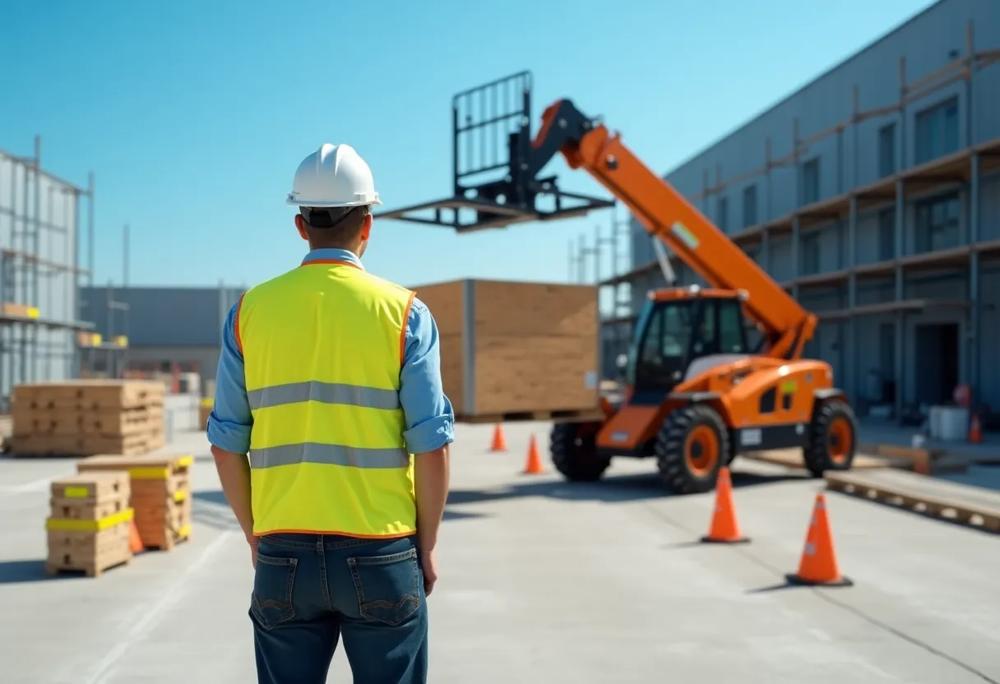
Obtaining a telescopic handler license is not merely a formal procedure, but a fundamental element that increases both safety and operational efficiency in a number of industries, primarily in the construction and agricultural sectors, where the use of this versatile equipment is essential for carrying out various tasks.
Examples of numerous situations where properly trained operators significantly impact the smoothness and safety of work emphasize the importance of appropriate qualifications, which enable not only effective use of machines, but also minimize the risk of workplace accidents. In this article, we will discuss in detail the process of obtaining these key licenses, and also present the unique benefits that come with having UDT certification in the dynamically developing job market.
Telescopic Handler License – Introduction
Having a telescopic handler license is a fundamental element that significantly impacts workplace safety in sectors where this advanced equipment is used daily. Obtaining such licenses not only meets legal requirements, but also plays a key role in ensuring safe and efficient performance of various tasks. Telescopic handlers, thanks to their versatility, find application in many fields such as construction, agriculture, and industry, making them an indispensable work tool.
One of the most important bodies responsible for certifying these licenses is the Technical Supervision Authority (UDT). Its task is not only to ensure compliance with applicable standards, but also to care for equipment safety. In the following part of the article, we will take a detailed look at the process of obtaining licenses, discuss requirements and benefits of having them, which will allow readers to better understand this important professional aspect.
What is a telescopic handler?
A telescopic handler is an advanced mechanical device that combines a range of functions, enabling its wide application in various working conditions. Thanks to its variable reach and high power, telescopic handlers perform well in carrying out tasks even in the most demanding environments. Compared to other types of equipment, telescopic handlers stand out for their versatility, ability to use various interchangeable attachments, which significantly increases their functionality, and flexibility in operating on difficult terrain.
- Versatility of application in various industries.
- Ability to use various interchangeable attachments, which significantly increases their functionality.
- Flexibility in operating on difficult terrain.
Selecting appropriate attachments enables operators not only to transport construction materials, but also to conduct high-altitude work or transport loads in agriculture. Thanks to telescopic handler licenses, operators can fully utilize the potential of this technology, which translates to greater efficiency and work safety.
Why are telescopic handler licenses important?
Having telescopic handler licenses is essential for every operator, as it not only guarantees the legality of performed work, but also significantly raises the level of safety during equipment operation. Lack of appropriate licenses often leads to serious accidents, especially on construction sites, where operators without qualifications endanger themselves and others. Investment in obtaining licenses brings many benefits, including:
- Compliance with legal regulations and industry standards.
- Increased work safety – trained operators effectively avoid hazards.
- Greater chances for attractive employment offers – employers prefer people with UDT certificates.
Requirements and Costs of Obtaining Licenses
Obtaining telescopic handler licenses requires meeting specific requirements and incurring costs related to the course and examination. Key information on this topic is as follows:
- The initial requirement is completing 18 years of age and having basic education.
- Operator course costs range from 600 to 2000 PLN, depending on the organizer and offered materials.
- Investment in obtaining licenses translates to significantly greater professional opportunities and work safety.
Key information regarding telescopic handler licenses
| Category | Details |
|---|---|
| Initial requirements | Completing 18 years of age, basic education |
| Course cost | From 600 to 2000 PLN |
| License validity period | 5 years |
| Renewal process | Short training and re-examination |
| Benefits | Higher employment chances, increased work safety |
Who can apply for licenses?
People interested in obtaining telescopic handler operator licenses must meet several basic requirements:
- You must be 18 years old.
- You should have basic education.
- Having previous experience in operating construction machinery will be an advantage.
In exceptional cases, deviations from standard requirements are possible, so it’s worth contacting an appropriate training center to learn about available options in situations where not all criteria are met.
What are the costs of telescopic handler operator courses?
Operator course costs can vary significantly depending on the training scope and offered materials. For example:
- Standard course – from 600 to 1500 PLN.
- Extended courses with additional materials – from 1500 to 2000 PLN.
The course price usually includes educational materials and access to equipment needed for practical classes. It’s also worth checking available discounts or financial support possibilities, which can significantly reduce the total training cost.
How long are telescopic handler licenses valid?
Telescopic handler licenses are valid for 5 years, which means operators must regularly renew their certificates to avoid legal problems and work complications. The renewal process usually includes short training and retaking the examination.
- License renewal terms: every 5 years.
- Renewal preparation: usually requires a refresher course and familiarization with new regulations.
License Obtaining Process
How exactly does the process of obtaining telescopic handler licenses proceed? We present step by step the stages that every candidate must go through:
- Registration for an operator course at an accredited center.
- Participation in training including theoretical and practical parts.
- Preparation for the final examination.
- Taking the examination before the UDT commission.
- Receiving the certificate after passing the examination.
At each stage, diligence and providing appropriate documents are required, which emphasizes the importance of formalities in the entire process.
What does the operator course look like?
The telescopic handler operator course combines theoretical and practical parts, providing comprehensive preparation for performing the profession. A typical training day may look as follows:
- 15% of time devoted to theory – regulations, equipment operation.
- 85% practice – maneuvers with the handler on the training ground.
Theoretical topics include basics of mechanics and safety measures, while in the practical part participants learn machine operation, which is crucial for safe and effective workplace implementation.
Who conducts the operator course?
Courses are conducted by instructors with appropriate certificates and rich industry experience. Their role is not limited only to teaching equipment operation, but also to conveying safety principles, which is extremely important in operator work. Cooperation with experienced specialists significantly affects the quality and effectiveness of training, preparing participants for real challenges on construction sites or in agriculture.
How does the state examination before UDT proceed?
The state examination conducted by UDT consists of two parts: theoretical and practical, which usually proceed in the following order:
- Theoretical part – includes questions on operational knowledge and regulations.
- Practical part – involves operating the telescopic handler in simulated working conditions.
Proper preparation and solid knowledge of principles such as safety are crucial for achieving success in the examination, which emphasizes the importance of systematic and comprehensive training.
Safety of Working with Telescopic Handlers
Safety during telescopic handler operation is extremely important, as improper use can lead to serious accidents. Compliance with OHS and fire safety regulations is an obligation for both employers and operators, and maintaining high safety standards minimizes the risk of incidents.
- OHS regulations – include, among others, the obligation to wear appropriate protective equipment.
- Regular employee training regarding equipment operation.
- Monitoring compliance with standards by appropriate authorities.
Having telescopic handler licenses significantly increases the safety level and reduces the risk of workplace incidents.
How do UDT licenses affect workplace safety?
Operation of telescopic handlers by qualified operators significantly reduces the number of accidents. Statistics indicate that companies employing only operators with telescopic handler licenses record fewer accident events, which emphasizes the importance of proper training. Regular license renewal also contributes to maintaining high safety standards, which is crucial for long-term stability and work efficiency in various sectors.
Application of Telescopic Handlers in Various Industries
Telescopic handlers show remarkable versatility and flexibility, finding application in many economic sectors. Below we present several examples of their use, which emphasize their irreplaceable role in various fields:
Examples of use in the construction industry
On construction sites, telescopic handlers play a key role, enabling:
- Transporting large quantities of construction materials, which significantly speeds up the construction process.
- Performing high-altitude work, such as installing structural elements at great heights.
- Maneuvering in difficult terrain conditions, which allows for effective equipment use even in the most demanding locations.
Construction companies that have invested in telescopic handlers often emphasize their importance in implementing various projects, affecting the efficiency and timeliness of work completion.
What role do telescopic handlers play in agriculture?
In the agricultural sector, telescopic handlers are indispensable in many daily activities, such as:
- Transporting crops from field to warehouses, which increases work efficiency and reduces time needed for logistics.
- Handling loads in stables and barns, facilitating work related to storing and transporting agricultural products.
Farms that have invested in telescopic handlers notice a significant increase in work efficiency and better resource utilization, which translates to greater productivity and profitability.
Use in industry – cases of specific applications
In industry, telescopic handlers find wide application, including in:
- Logistics – for transport and unloading of goods, which streamlines warehouse and distribution processes.
- Production – in the area of raw material storage, which allows for better space organization and increased operational efficiency.
Industrial companies using telescopic handlers notice benefits in the form of increased operational fluidity and lower risk of goods damage, which has a direct impact on product quality and competitiveness.
Benefits of Having Telescopic Handler Licenses
Having telescopic handler licenses brings numerous benefits for both operators and employers. Below we present some of the most important advantages:
- Higher employment chances in industries requiring qualified operators.
- Possibility of promotion and specialization at work, which opens doors to more advanced positions.
- Increasing safety standards and work efficiency, which translates to better results and lower accident risk.
Employees with telescopic handler licenses record higher results in their tasks and greater interest from future employers, which testifies to the growing importance of certified competencies in the job market.
Higher employment chances
Having telescopic handler licenses significantly increases candidate attractiveness in the job market. Statistics show that certified operators receive employment offers faster and easier than their colleagues without appropriate qualifications. Thanks to specialization, operators can count on more favorable working conditions and higher salaries, making obtaining licenses a profitable investment in both short and long-term career perspectives.
Career development opportunities in construction and agricultural industries
Having telescopic handler licenses opens wide career opportunities, including:
- Promotion to managerial or specialized positions, for example as a handler technician, which allows for professional development and increased responsibility.
- Further training and certifications, which are valued in the job market and can lead to further promotions and specializations.
Operators have the opportunity to acquire new skills through participation in specialized courses, which significantly contributes to their professional development and increases their competitiveness in the job market.














