


Introduction to Telescopic Loaders
Telescopic loaders are extremely versatile machines that have gained wide recognition in various sectors of the economy, such as construction, agriculture, and industry. Their exceptional ability to lift heavy loads to significant heights, combined with a telescopic boom, enables precise maneuvering even in the most confined spaces, making them indispensable in challenging working conditions. In this article, we will examine the key features of the best telescopic loader models that distinguish them from the competition available on the market, and discuss why they are an essential tool for professionals in the construction, agricultural, and industrial sectors. We will also present why choosing the best telescopic loader can significantly impact the efficiency of your operations.
- Versatility – telescopic loaders are capable of performing a wide range of tasks, making them applicable in many different industries, from construction to agriculture, and the best telescopic loader guarantees reliability in each of these applications.
- Load lifting capability – modern models offer impressive lifting capacity from 2270 kg to over 5450 kg, significantly increasing their efficiency and enabling the implementation of diverse projects.
- Telescopic boom – allows for precise lifting and transport of heavy loads to heights reaching up to 30 meters, which is crucial in many industrial and construction applications.
What is a telescopic loader?
A telescopic loader is a device characterized by advanced technical parameters, reliability, and innovative solutions that make it an invaluable tool in many sectors. When evaluating the quality and usefulness of telescopic loaders, particularly important are key criteria:
- Lifting height and capacity – these key parameters determine the range of machine applications and its efficiency in various working conditions.
- Engine and performance – loaders should be equipped with engines meeting the highest emission standards while providing high power necessary for intensive work.
- Variety of attachments – the ability to adapt the machine to different tasks and working conditions through a wide selection of attachments increases its versatility and usefulness in various industries, which is a feature of the best telescopic loader.
Versatility of telescopic loader applications
Telescopic loaders play a key role in many industries, which testifies to their remarkable versatility and wide range of applications:
- Construction – used for transporting construction materials and lifting heavy loads to heights, significantly speeding up and improving construction processes. Model and price comparison shows how different loaders can be adapted to specific construction needs.
- Agriculture – support various farm work such as crop loading, fertilizer transport, or moving heavy agricultural machinery.
- Industry – perform excellently in transporting components and raw materials in production halls, enabling efficient resource management and increasing productivity.
The flexibility of these machines makes them easily adaptable to the specific needs of each industry, translating into their wide application and indispensable role in many sectors of the economy. Choosing the best telescopic loader additionally strengthens these advantages.
History and development of telescopic loaders
The history of telescopic loaders dates back to the 1960s, when they were first introduced to the market in response to growing demand for efficient tools for lifting and moving heavy loads. Since then, thanks to continuous technological innovations, telescopic loaders have undergone significant evolution, including:
- Introduction of the telescopic boom, which significantly increased the device’s operating range, enabling work at greater heights and in more demanding conditions.
- Modern hydraulic systems that improve lifting efficiency and machine stability, which is crucial in dynamic working environments.
- Engine innovations that not only allow for fuel savings but also ensure compliance with increasingly stringent emission standards.
Types of telescopic loaders
The market offers a wide selection of different types of telescopic loaders, enabling their perfect adaptation to the specific needs of users in various industries:
Telescopic loaders in construction
In the construction sector, the most commonly used are telescopic loader models characterized by high lifting capacity and appropriate lifting height, which is essential for efficient work on construction sites. Features that distinguish these machines include:
- High stability and solid construction, ensuring work safety even in the most difficult terrain conditions.
- Advanced control systems that enable precise maneuvering, significantly increasing operator comfort and work efficiency.
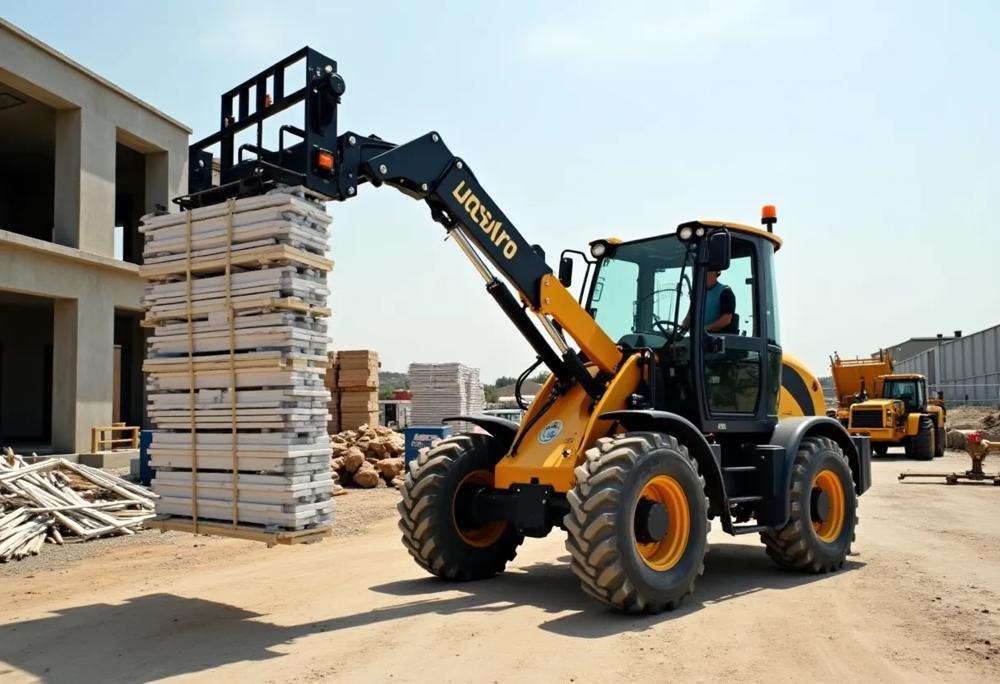
- Variety of attachments, such as forks for transporting pallets and other bulk materials, which increases the versatility and application of the machine in various construction tasks.
Telescopic loaders in agriculture
In the agricultural sector, not only power and lifting capacity are crucial, but also the operational efficiency of machines that must meet the requirements of dynamically changing working conditions in the fields:
- Models equipped with high movement dynamics, enabling quick and efficient movement between different areas of the farm, thereby increasing work productivity.
- Fuel efficiency, which is extremely important in the context of long-term field operations, allowing for significant savings in operating costs and increasing the profitability of agricultural activities.
Telescopic loaders in industry
In the industrial sector, telescopic loaders play a key role in transporting finished products and raw materials in production halls, enabling efficient space and resource management:
- Models adapted for work in tight spaces of production facilities, making them ideal for tasks in limited locations where precision and maneuverability are crucial.
- Advanced safety systems that protect workers and increase safety levels during operations, minimizing the risk of accidents and damage.
Key features of telescopic loaders
Telescopic loaders must meet a series of detailed requirements that guarantee their efficiency and reliability in daily work:
Lifting height and capacity of telescopic loaders
- Enable lifting loads to heights reaching up to 30 meters, allowing for efficient work at great heights, essential in many industries.
- Technical data of different models are crucial for choosing the appropriate machine. For example:
- Model A: lifting capacity – 5500 kg, lifting height – 25 m.
- Model B: lifting capacity – 4000 kg, lifting height – 30 m.
Engine and parameters of telescopic loaders
Engines in telescopic loaders should be not only economical but also meet the latest emission standards, which is crucial in the context of global ecological trends. Key parameters worth considering are:
- Efficiency – important for fuel savings and overall operational efficiency of the machine, translating into lower operating costs.
- Power – appropriate engine power is crucial for the machine’s total capabilities and its versatility in various applications, ensuring smooth and reliable operation.
Attachments and their application in telescopic loaders
Available attachments significantly affect the functionality and versatility of telescopic loaders. It’s worth paying attention to:
- Buckets for transporting and storing materials, which facilitate work in various terrain conditions and increase operation efficiency.
- Forks for pallet loading, which speed up operational processes and enable quick and safe transport of bulk and palletized materials.
- Work platforms for access in hard-to-reach locations, ensuring operator safety and work efficiency while enabling easy access to high places.
Technological innovations in telescopic loaders
The introduction of modern technologies such as electric drives, digital control systems, and automated solutions significantly increases efficiency and operator work safety, which is crucial in the dynamically developing industrial and construction sector. Implementation of the best telescopic loader with the latest technologies translates into even greater operational benefits.
Rental vs. purchase of telescopic loader
The decision between renting and purchasing a telescopic loader should be based on individual needs and project specifics, considering both financial and operational aspects:
Advantages of telescopic loader rental
- Lower initial costs, which is particularly beneficial for short-term projects that do not require long-term equipment use.
- Access to the latest loader models without the need to incur high investment costs, allowing the use of the latest technologies and solutions without long-term financial commitments.
- Flexibility in equipment selection for changing project requirements, enabling quick adaptation to new conditions and operational needs.
What to know before purchasing a telescopic loader?
When deciding to purchase a telescopic loader, it’s worth carefully considering several key aspects that will ensure optimal choice and maximum investment efficiency:
- Technical specifications such as lifting capacity, lifting height, and engine performance should be precisely matched to specific work requirements so the machine can meet daily operational challenges. Choosing the best telescopic loader ensures that all these parameters will be at the highest level.
- Budget – it’s important that the investment aligns with financial capabilities, considering not only the purchase cost but also operating costs and potential repairs.
- Application – model selection must correspond to the specifics and nature of practical application, ensuring maximum efficiency and equipment durability over long-term use.
Examples of telescopic loader applications
In each of the mentioned industries, numerous examples of effective telescopic loader utilization can be found, demonstrating their indispensable role in daily work:
Examples of telescopic loader applications in construction
- Transport of construction materials on construction sites, significantly contributing to time savings and reduced operating costs through efficient resource management.
- Lifting heavy structural elements to great heights, ensuring smooth construction work progress and enabling project completion on time.
Examples of telescopic loader use in agriculture
- Loading crops onto trucks during harvest, speeding up the transport process and enabling quick movement of large quantities of agricultural products.
- Transport of agricultural production means such as fertilizers or harvesting machines, increasing operation efficiency and minimizing downtime on the farm.
Industry case studies regarding telescopic loaders
- Support for assembly processes in production facilities, which not only improves worker safety but also increases production operation efficiency by optimizing logistics processes.
- Transport of components and raw materials to different production sections, streamlining work organization and minimizing operational error risk, thereby increasing overall facility productivity.
Future of telescopic loaders
The future of telescopic loaders seems to be closely linked to further technology development in the heavy equipment industry, aiming to increase efficiency and environmental friendliness:
Trends and innovations in telescopic loader production
- Growing importance of electric drives, which aim not only to reduce harmful substance emissions but also lower operating costs by increasing machine energy efficiency.
- Development of remote control technology, significantly increasing operator safety during work while enabling precise machine management from a distance, which can be particularly useful in dangerous or hard-to-reach places.
Electric telescopic loaders – modern solutions
Electric telescopic loaders are gaining popularity by offering revolutionary operational benefits that meet growing market demands:
- Lower operating costs due to significant energy savings, translating into long-term savings for users and reduced operational budget burden.
- No harmful substance emissions, beneficial for the natural environment and compliant with increasingly stringent ecological standards, which can also contribute to improving the image of companies using such solutions.
Challenges for manufacturers and the telescopic loader market
- Growing competition in the construction machinery market forces continuous innovation and product improvement, posing a challenge for manufacturers who must constantly invest in research and development to remain competitive.
- Environmental regulations impose additional obligations on manufacturers, affecting production costs and development strategy while forcing the search for more ecological and energy-efficient technological solutions.
Summary of telescopic loader information
- Telescopic loaders are extremely versatile machines that have found application in many industries, from construction to agriculture and industry, thanks to their flexibility and versatility.
- The best models are distinguished not only by high technical parameters but also by construction solidity and innovation, making them indispensable tools in professionals’ daily work. Choosing the best telescopic loader provides additional operational benefits.
- The choice between rental and purchase should be adapted to individual needs and work specifics, allowing for optimal resource utilization and maximizing operational efficiency.
Why is choosing the right telescopic loader important?
Choosing the right telescopic loader is crucial for the operational efficiency of any company or project. A properly selected model affects:
- Increased work productivity through process optimization, enabling faster and more efficient task completion.
- Equipment adaptation to specific requirements and project characteristics, translating into time and resource savings while minimizing operational error risk.
What factors influence telescopic loader effectiveness?
- Key factors that significantly impact telescopic loader effectiveness are: engine performance, build quality, and manufacturer support in servicing and spare parts supply, ensuring long-term machine reliability.
- Technical parameter optimization is essential for efficient device operation and meeting user expectations, translating into better performance and greater satisfaction with equipment use.
Most important information in the article:
- What telescopic loader to buy: key aspects and model comparison
- Which telescopic loader to choose: key selection factors
- Telescopic loader price: model comparison and construction applications
- Articulated telescopic loader: guide to functions, models and applications
- Chinese telescopic loader – advantages, disadvantages and applications














