

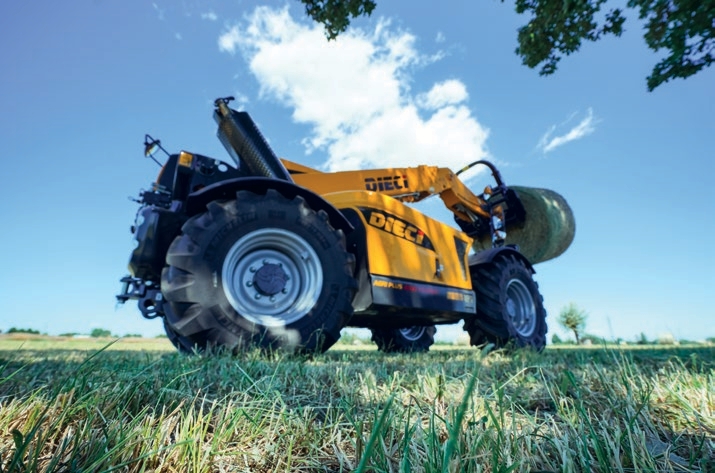
In the dynamically developing construction and agriculture sectors, telescopic loader attachments play not only a key role in improving operational efficiency, but also enable adaptation of these advanced machines to a wide spectrum of tasks requiring precision and power. Strategic investments in appropriately selected accessories form the foundation for maximizing work productivity, which is essential in a competitive industrial environment. This article will offer an in-depth analysis of various types of equipment, their specific applications, and present practical guidelines that will facilitate the selection of the most optimal attachment solutions for telescopic loaders, tailored to individual user needs in the Polish construction and agricultural machinery market.
Introduction to telescopic loader attachments
Telescopic loader attachments form the foundation for significantly expanding the functionality of these extremely adaptable machines, which play an invaluable role in various industrial sectors. Thanks to the impressive variety of available accessories, operators have the ability to precisely adapt loaders to specific operational requirements, which not only increases work efficiency but also optimizes operating costs. This article aims to provide a detailed analysis of various types of accessories, their applications, and provide practical guidelines that will help in selecting the most appropriate solutions tailored to individual user needs.
Types of telescopic loaders
Telescopic loaders, due to their versatility and flexibility, can be classified into several key types, each characterized by unique features and optimal application in specific operational conditions:
- Telescopic loaders: Equipped with the ability to lift loads weighing from 2000 to 5500 kg, these machines are distinguished by extraordinary versatility, making them an ideal choice for various tasks in sectors such as construction or agriculture.
- Track loaders: Designed for work on soft and unstable ground, these loaders offer increased stability, which is crucial in undeveloped terrain and during field work.
- Rotating loaders: Thanks to the ability to rotate 360 degrees, these models provide exceptional maneuverability and work efficiency in limited spaces, such as warehouses or crowded construction sites.
- Backhoe loaders: Integrating loading functions with digging capability, these machines offer extraordinary functionality on construction sites, enabling simultaneous performance of various earthwork tasks.
Each of the mentioned types of telescopic loaders has specific features that make it best suited to specific tasks in different industries, making the process of selecting the appropriate model a strategic element in operational planning.
Comparison of key types of telescopic loaders
| Loader Type | Attributes | Applications |
|---|---|---|
| Telescopic loader | Multifunctionality, ability to mount various accessories, lifting capacity from 2000 to 5500 kg | Agriculture, Construction, Municipal services |
| Track loader | Stability on soft ground | Work in undeveloped areas, Construction |
| Rotating loader | 360-degree rotation capability | Work in limited space, Warehouses |
| Backhoe loader | Multitasking with digging functionality | Construction, Earthwork |
| Wheel loader | Versatility of applications | Material transport, Warehouse work |
Telescopic loaders – versatility and utilization possibilities
Telescopic loaders have long been gaining popularity in various industrial sectors, mainly due to their unprecedented versatility and ability to adapt to diverse tasks. These machines are not only indispensable in transporting construction materials, but also perform excellently in warehouse goods management and in performing various agricultural work. Their exceptional capabilities include:
- Lifting heavy loads to significant heights, enabling efficient material management in high warehouses or on construction sites.
- Transporting materials in difficult terrain conditions, making them an ideal tool in agriculture and on construction sites located in less accessible places.
- Performing precise tasks in limited space, which is invaluable in tight urban spaces or crowded work sites.
Comparison of different types of loaders
When analyzing various types of telescopic loaders, it is crucial to pay attention to fundamental attributes such as lifting capacity and mobility, which determine their effectiveness in different operational conditions. Thanks to detailed comparison tables, specialists from the construction and agricultural industries can easily assess the advantages and potential limitations of individual models, which significantly facilitates the decision-making process regarding the purchase or rental of appropriate equipment.
Types of telescopic loader attachments
Telescopic loader attachments, being a key element of their adaptability, can be divided into several main categories, each serving specific operational functions:
- Volumetric buckets: Designed for efficient loading and transport of various materials, which is essential in many industrial and agricultural applications.
- Grabs: Used to stabilize loads during transport, which not only increases operation safety but also facilitates manipulation of unstable materials.
- Work platforms: Enable safe access to high places, which is particularly valuable during construction and maintenance work.
- Hydraulic winches: Allow for quick and effective lifting of heavy objects, which significantly speeds up work processes and increases overall work productivity.
Key accessories affecting loader functionality
Each of the mentioned accessories significantly enhances the functionality of telescopic loaders, enabling their adaptation to specific operational requirements. For example, volumetric buckets are exceptionally effective in transporting bulk materials, which is essential in the construction and agricultural sectors, while grabs provide better stability when moving irregularly shaped materials, which in turn minimizes damage risk and increases work safety.
Application of attachments in construction and agricultural industries
Telescopic loader attachments find wide and diverse application in both construction and agricultural industries, thanks to their adaptability and ability to adjust to different operational scenarios. Examples of practical use include:
- Construction: Using volumetric buckets for loading and transporting construction materials, which not only significantly speeds up construction processes but also increases precision and operational efficiency.
- Agriculture: Using grabs to move hay bales or fertilizers is essential in daily agricultural operations, enabling quick and safe management of agricultural materials.
Selecting appropriate telescopic loader attachments
When deciding to purchase or rent telescopic loader attachments, it is important to consider several key factors that determine the optimal choice for specific operational needs:
- Technical specifications of accessories: It is essential that the technical parameters of the selected attachment match the requirements of the specific task, ensuring efficiency and operation safety.
- Type of tasks performed: Characteristic features of performed tasks can significantly influence the choice of specific accessory, enabling better adaptation to specific worker needs.
- Budget and availability: Cost and availability of selected attachments are key aspects for any enterprise, so it is important to make a choice that will be economically justified and logistically feasible.
Proper selection of attachments not only affects increased operational efficiency but also ensures work safety in various conditions, which is essential for every operator working in a dynamic environment.
Future of the telescopic loader attachment market in Poland
Forecasts for the coming years indicate significant growth in the telescopic loader attachment market in Poland, which is a direct result of growing demand in construction and agricultural sectors. Introduction of new technologies and innovative solutions will have a key impact on shaping the future of this market, offering users increasingly advanced and efficient work tools.
Analyzing future development directions, it is worth paying attention to:
- Integration of advanced automation systems: These technologies will not only increase productivity but also significantly raise the level of work safety, minimizing the risk of human error and optimizing operational processes.
- Growing importance of ecological attachments: In response to growing environmental protection requirements, manufacturers will focus on developing environmentally friendly attachments, which not only fits into global ecological trends but also responds to the needs of environmentally conscious ecotourists and companies striving for sustainable development.
Faced with a dynamically changing market, telescopic loader attachment manufacturers continuously invest in innovative solutions that not only significantly increase machine productivity but also respond to growing requirements for sustainable development, which is becoming a key aspect in today’s economy. Thanks to the integration of advanced automation systems and intelligent management technologies, precise monitoring of operational parameters is possible, which in turn translates into energy consumption optimization and minimization of operating costs, offering users both savings and increased work efficiency. Moreover, the development of accessories made from environmentally friendly materials and modular constructions significantly facilitates equipment adaptation to various applications, which is particularly important in the Polish market, where diverse working conditions require flexible and versatile solutions adapted to the specifics of local needs.


