

The use of telescopic loaders and their booms forms the foundation in both construction and agricultural sectors, playing a key role in increasing operational efficiency. Understanding how essential components and the wide range of available attachments affect the performance and functionality of these machines is necessary for every industry professional. This article will provide comprehensive information regarding telescopic boom functions, various types of buckets, and the most important guidelines for selecting appropriate solutions that have the potential to significantly increase operator productivity.
Introduction to Telescopic Loader Boom
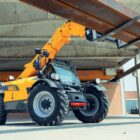
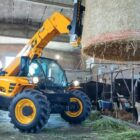
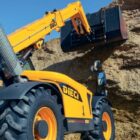
An extremely important component that significantly increases the versatility and functionality of telescopic loaders is their boom. This advanced combination of characteristics typical of forklifts and cranes makes these machines indispensable tools in many diverse tasks related to material handling. The telescopic boom enables not only lifting and transporting heavy loads, but also their precise placement, which consequently emphasizes its key role in both construction and agricultural sectors.
Among the main applications of the telescopic loader boom, the following should be distinguished:
- Lifting construction materials such as bricks or drywall, which significantly facilitates renovation and construction work.
- Transport of grain and other loose materials in the agricultural sector, which contributes to increasing farm efficiency.
- Handling heavy loads even on uneven terrain, which is invaluable in difficult terrain conditions.
The telescopic boom is characterized by a series of key functions that definitely distinguish it from other solutions. First of all, high maneuverability enables precise maneuvers even in limited space, which is extremely important on crowded construction sites or in tight warehouse spaces. Additionally, the ability to work in limited space allows for efficient use of available workspace while minimizing the risk of collision with other objects.
Benefits of using a telescopic loader boom include:
- Increased operational efficiency through faster and more efficient execution of loading tasks.
- Versatility in using various attachments, which allows adapting the machine to the specific needs of different industries.
- Improved precision and safety during loading operations, thanks to advanced control and stabilization systems.
What is a telescopic loader boom?
A telescopic loader boom is an advanced hydraulic mechanism consisting of several telescopic sections that enable its dynamic extension and retraction depending on operational needs. Thanks to this flexibility, the machine’s reach can be precisely adjusted to the specifics of the tasks being performed, which significantly increases its efficiency. Key elements of the boom include:
- Telescopic sections – available in various lengths that can be easily adjusted or folded, allowing flexible response to changing working conditions.
- Hydraulic system – responsible for powering the movements of the entire boom, ensuring smoothness and precision of operations.
Various types of booms are available on the market, and their proper selection has a key impact on the operational efficiency of the telescopic loader, enabling adaptation to the specific requirements of different economic sectors.
Significance of telescopic loader boom in loaders
The telescopic boom is the foundation of the functionality and efficiency of the entire machine, enabling the implementation of advanced tasks that would be impossible to perform using standard forklifts. Thanks to it, telescopic loaders can:
- Lift and transport loads to significant heights, which is necessary in the construction of tall buildings and in warehouses with high shelf heights.
- Precisely arrange materials in limited space, which significantly improves logistics and warehouse processes.
- Optimally utilize available power and operational resources, which translates into increased overall work efficiency.
In the construction industry, the telescopic boom has proven indispensable for loading heavy materials such as concrete or steel structural elements, while in the agricultural sector it supports the transport of crops and fertilizers, contributing to the improvement of agrarian processes. Using a telescopic loader boom definitely increases both range and precision of performed tasks, which has a direct impact on the operational efficiency of machines.
Main functions of telescopic loader boom
The telescopic loader boom performs a number of functions that significantly contribute to increasing the operational efficiency of the machine. The most important of these include:
- Lifting – enables reaching heights that are inaccessible to traditional forklifts, which is crucial in high warehouses and construction sites.
- Transport – significantly facilitates the movement of materials at various stages of work, both on construction sites and in agricultural farms, which translates into time and resource savings.
- Precise arrangement – thanks to advanced hydraulic control, precise positioning of loads is possible, which minimizes the risk of damage and increases operation safety.
Additionally, the ability to mount various types of attachments further increases the functionality of the telescopic loader, making this machine suitable for many diverse tasks. Thanks to this, it becomes an ideal tool in many industries, from construction to agriculture, adapting to their specific needs.
Construction and operation of telescopic loader boom
The solid yet lightweight construction of the telescopic loader boom is based on the highest quality materials that ensure durability and high operational efficiency. Key structural elements include:
- Telescopic sections – enabling range adjustment and adaptation to individual operator needs, which is extremely important in dynamically changing working conditions.
- Hydraulic system – responsible for movement and stability of the boom, ensuring smoothness and precision of all operations.
- Bearings – allowing smooth movement of individual boom segments, which minimizes mechanical wear and increases the durability of the entire structure.
The boom operating mechanism is based on precise telescopic movements that are activated by hydraulic motors. The operator, thanks to advanced control systems, has full control over every movement of the machine, which enables adjustment of speed and force to current operational needs. Such flexibility in control ensures that the telescopic loader can efficiently perform even the most demanding tasks.
How does a telescopic boom work?
The functioning of the telescopic boom is based on the coordinated action of several key stages:
- Activation of the hydraulic system, which initiates telescopic movements of the boom according to planned operations.
- The operator controls the movement of the boom, taking into account specific operational needs and terrain conditions, which allows for precise and safe task execution.
- Stabilization functions are implemented to ensure safety and operational efficiency, minimizing the risk of machine tipping and load damage.
In practice, this means, for example, lifting construction materials to great heights, or carrying heavy loads on uneven agricultural terrain, which significantly improves operational processes in various sectors.
Stabilization and operation safety
Safety during operations with telescopic loaders is absolutely crucial, therefore the boom should be equipped with advanced stabilization systems that ensure certainty and protection during work. The most important systems include:
- Counterweight systems that effectively prevent machine tipping by balancing load weight and stabilizing the entire structure.
- Monitoring functions that continuously analyze loads and warn the operator in case of exceeding maximum permissible values, allowing avoidance of excessive boom loading.
In Poland, strict UDT standards apply, which regulate in detail the safety standards of construction machinery. Compliance with basic safety principles is mandatory for all users, which guarantees not only operator protection, but also care for equipment and work environment.
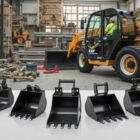
Types of telescopic buckets
Telescopic buckets play a key role in loading operations, enabling efficient transport of various materials. Many categories of buckets are available on the market, each optimized for specific applications. The most popular types include:
- Universal buckets – designed for a wide range of applications, ideal for various tasks in both construction and agriculture.
- High dump buckets – intended for work at great heights and for storing materials in large warehouse areas.
- Grapples and side buckets – specialized tools enabling precise gripping and transport of loads in limited spaces.
Choosing the right telescopic bucket is essential for maximizing operational efficiency and ensuring safety during work. A properly selected bucket type can significantly facilitate the implementation of a specific task, regardless of the industry in which it is used.
Universal vs specialized buckets
Telescopic buckets can basically be divided into two main types, each with its unique advantages and specific applications. The first of these are universal buckets, which are characterized by versatility and the ability to perform various tasks, making them an ideal choice for operators needing flexibility in daily work. On the other hand, specialized buckets are dedicated to specific tasks, such as handling bulk materials, where more precise and concentrated functions are required.
To facilitate making the best choice, it is worth using comparison tables that clearly present the differences and capabilities of individual bucket types, thus helping to identify the most appropriate tool for a specific task.
Comparison of telescopic bucket types
| Bucket type | Application | Key features |
|---|---|---|
| Universal bucket | Various construction and agricultural materials | Versatility, easy replacement, medium capacity |
| High dump bucket | Work at great heights, warehousing | Reinforced construction, special geometry for stability |
| Grapple | Gripping and precise load arrangement | Gripping mechanism, high precision |
| Side bucket | Work in limited space, side operations | Special shape, increased maneuverability |
Choosing the right bucket for specific tasks
When choosing a telescopic bucket, it is crucial to consider several important factors that can significantly affect the efficiency and safety of performed operations. The following should be taken into account:
- Type of material to be transported, for example aggregate, grain or other bulk substances.
- Size and shape of the bucket, which must be adapted to specific needs and working conditions.
- Bucket capacity and operational requirements, which is crucial for ensuring stability and safety during loading and transport.
Creating a checklist allows for a more accurate understanding of requirements related to specific material and operation, which facilitates making the right bucket choice and minimizes the risk of errors during work.
Performance comparison of different bucket types
Analyzing the performance of different types of telescopic buckets requires considering several key aspects, such as:
- Loading speed and throughput, which directly affect overall operation efficiency.
- Operation precision, which is particularly important when using specialized buckets, enabling accurate load positioning.
Reports and performance test results can provide valuable information about the capabilities of individual bucket models, which ultimately allows for making an informed and optimal choice that meets the user’s specific needs.