

Forklifts widely used in all kinds of warehouses or production halls serve to transport, arrange or store loads of considerable weight. The professional name for a forklift used by the Technical Supervision Office (UDT) is a lifting truck. Each vehicle has a maximum load tonnage specified by the manufacturer, which the operator should not exceed. This risks damaging the machine. We distinguish forklifts with small tonnages, e.g. 1.5 tons, as well as large machines that can lift loads of up to 15 tons. What categories of forklifts are distinguished? We’ll explain.
Categories of forklifts
We distinguish several categories of forklifts, and each of them has different specifications and serves different types of work, not only in warehouses. Among others, we distinguish such forklifts as:
- Front-loading lifting truck
- Side-loading lifting truck
- Gantry lifting truck
- Specialized lifting truck
Front-loading forklift
The most popular and most commonly used type of forklift is the front-loading forklift. Front-loading trucks have a so-called counterweight, which is usually also the battery of the device (electric-powered forklifts). The operation of a front-loading forklift is simple. The weight of the lifted load is balanced by the forklift’s counterweight, hence weights larger than the manufacturer specifies should not be lifted.
Side-loading forklift
A side-loading truck works best in high-storage warehouses and narrow warehouse spaces due to its construction and maneuverability. The forklift’s forks are mounted perpendicular to the operator’s position, and appropriate counterweight ensures high work stability. We distinguish single-sided and double-sided side-loading forklifts.
Gantry forklift
Another category of forklifts is the gantry forklift. As the name suggests, its frame has the shape of a gantry, and the load lifted by it is suspended within it. Forklifts of this type serve, among other things, for precise and safe transport of containers.
Specialized forklift
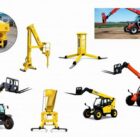
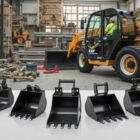
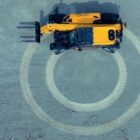
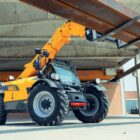
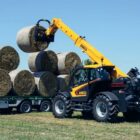
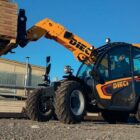
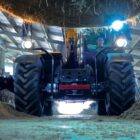
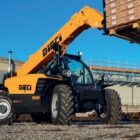
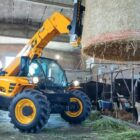
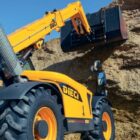
A specialized forklift is nothing other than a forklift with variable reach. It ensures safe transport of goods in difficult terrain conditions. A specialized forklift has a special arm that can easily maneuver vertically and horizontally, which allows for precise placement of a given load in the target location. Such forklifts are most commonly used on construction sites and in large agricultural farms.
Categories of forklift licenses
The Technical Supervision Office distinguishes three categories of forklift licenses. Each category is marked with an appropriate symbol and each is issued with a separate permit. We therefore distinguish such categories as:
- III WJO
- II WJO
- I WJO
of which hierarchically I WJO is the highest category of forklift licenses, II WJO intermediate, and III WJO the lowest.
I WJO authorizes the future operator to use all types of forklifts, including specialized forklifts. II WJO is the most commonly issued permit, which authorizes operation of all lifting trucks excluding specialized forklifts. III WJO authorizes us only to operate pedestrian-controlled and remotely controlled lifting trucks.