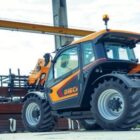


The winter season poses a real challenge for forklift operations. It’s the most intensive period in the production and warehousing sector, which is why vehicles must be prepared in advance for increased exploitation. Shorter days, low temperatures, snow, fog – and thus limited visibility – are major obstacles for cargo transportation and performing all other operations. This also means significantly higher risk of breakdowns and collisions. Forklift components are exposed to faster wear, and road conditions reduce operator safety. You’ll learn how to maintain good vehicle condition during this special time from the article below.
What threats are forklifts exposed to during winter?
During winter, forklifts are exposed to a series of threats that can negatively affect their technical condition and performance. It’s worth identifying them before starting pre-season preparations. Atmospheric precipitation – freezing rain or snow – poses a major obstacle. Wet surfaces covered with snow or ice can affect vehicle stability and cause it to slip. With rapidly falling dusk during the autumn-winter period, there are also greater visibility problems. Heavy snowfall can cause impassability of transport routes. All chemical agents used for spreading on slippery, icy surfaces also adversely affect forklifts. Equipment moving both inside and outside buildings is exposed to sudden temperature changes.
Forklift service before winter
To prepare for the period of increased work, a thorough forklift inspection should be conducted, which will certainly minimize the risk of damage and breakdowns. This should be done already in autumn, before winter attacks in earnest. All vehicle components must be thoroughly checked. Important is tire condition control and replacement of all fluids and oil with those designed for operation in low temperatures. Elements such as electronics, lighting, ignition and brake systems should pass efficiency tests. Adapting equipment to adverse weather conditions will translate into its longer lifespan, as well as operator safety and comfort.
Winter and forklift – season preparation step by step
A series of adverse weather conditions during winter significantly hinders outdoor work. Therefore, proper care for the technical condition of industrial lift trucks is so important.
Environment preparation
The area where the forklift moves should be regularly cleared of snow to enable safe passage. You should maintain cleanliness of the maneuvering area and prevent loss of vehicle traction by spreading sand on the surface. The use of road salt and calcium chloride, which adversely affect the forklift body, is discouraged. Manual snow removal over extensive terrain is time-consuming. Then forklifts come to the rescue. Just the right attachment, and the vehicle can serve as a snow plow. Additionally, attention must be paid to proper lighting of the entire area – winter lacks light, and weather conditions significantly limit visibility. In halls where forklifts enter from outside, melted snow should be continuously removed to prevent vehicle slipping.
Forklift tire condition
Before winter, you must absolutely check tire condition and replace with new ones if necessary. In case of snowy or icy surfaces, tire traction can be increased by additionally using studs or snow chains. However, remember that chains can be used on both pneumatic and super-elastic tires, while studs only on solid tires.

Fluids and oils designed for low temperatures
Negative temperatures create risk of fluid freezing in the radiator or engine. This can lead to serious damage, such as engine seizure or damage to individual components. Their repair involves significant costs. For this reason, fluids and oils specially dedicated to work in low temperatures should be used.
Proper lighting and marking of the forklift
Due to limited visibility in winter season, forklifts are more frequently exposed to collisions and accidents. Therefore, proper lighting and vehicle marking is so important. All non-functioning bulbs should be replaced, and if necessary – additional lamps should also be purchased and installed.
Fuel level under control
In combustion forklifts, it’s recommended to refuel directly after finishing work. An empty tank left in negative temperatures poses risk of water vapor condensation, which consequently leads to filter clogging and engine starting problems.
Securing forklift body and chassis
As part of season preparations, special attention should be paid to the condition of the body and chassis. Any signs of corrosion should be repaired. Most attention should be focused on covers protecting the engine or vehicle battery. It’s also worth using special preservative preparations that create a protective coating on the surface. Thanks to this, the forklift will be more resistant to contact with frost, moisture, or chemical agents such as road salt or calcium chloride used for spreading on slippery surfaces.
Storing the forklift in winter
During winter, it’s very important to avoid leaving the forklift outside after finishing work. Exposure to harmful weather conditions such as snow, moisture, frost can lead to corrosion of components essential for safety and performance. Worse still, there’s a threat of water vapor condensation in the ignition mechanism. This threatens serious problems with engine starting, to which LPG-powered forklifts are most exposed. Therefore, these devices should be stored in dry rooms with positive temperature.
Many machines work both outside and inside buildings. When winter takes its toll, sudden temperature changes during work should be limited, which have an adverse effect on forklift lifespan. This can be achieved by using a so-called “buffer zone”, preparing the vehicle for environment change. A specially adapted room for this purpose should have a temperature from 0° to 5°C, and the vehicle should stay in it for at least 30 minutes before proceeding to perform subsequent operations.
Securing electrical installation in the forklift
Many assisting functions in the forklift such as heating, lighting, or steering system depend on electronic installation. Therefore, before the season, the condition of all elements, connections, and individual wires should be thoroughly checked. You must also ensure they are properly protected against external factors.
During winter, electric forklifts prove less problematic. Nevertheless, remember that in harsher conditions, battery performance may decrease. After finishing work, the device should be stored in a warm place, with the battery charged to at least half capacity.
Operating the forklift in winter
In winter, the risk of breakdown or collision is much greater. Snowy or icy surfaces can lead to loss of forklift stability. Therefore, the operator driving the vehicle should exercise special caution and adjust speed to prevailing circumstances. Each time before starting work, they should check the technical condition of the forklift and start it earlier so the engine has time to warm up. Faulty equipment should be immediately removed from operation. It’s also worth considering conducting training on forklift operation during winter, which will make operators aware of threats resulting from working in difficult conditions.
Forklift operator comfort
Several hours of work in frost, body cooling, reduced concentration are factors dangerous to the organism. Especially during winter, the employer should ensure comfortable conditions for subordinates. If the forklift doesn’t have a cabin, its purchase should be considered, and additionally choose one equipped with heating. Operators should receive winter clothing protecting against precipitation and wind, warm hats and gloves, and reflective vests. It’s also worth ordering more breaks for warm meals and warming drinks. Maintaining the worker in health and good condition will help reduce the number of downtimes and absences related to flu season.
Summary
Failure to adapt the forklift to the specifics of work during winter in outdoor conditions can result in faster equipment wear, breakdown, and dangerous accidents. Proper preparation of equipment and work environment will help avoid potential threats and related additional costs. It’s worth investing in a detailed forklift inspection before starting the season, as well as in additional equipment increasing operator work comfort.