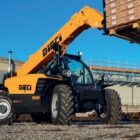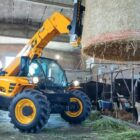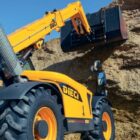


Operating a forklift requires proper training, concentration, reflexes, and skills. However, even the most experienced operators make mistakes. These can be the result of poor work organization, bravado, carelessness, or lack of focus. Many forklift accidents can be avoided through good discipline and adherence to safety rules.
In the following article, we present 10 most common mistakes in forklift operation. Awareness of the scale of the problem will help appreciate daily, routine control activities before starting work in a warehouse or production hall. It will also direct attention to certain preventive actions during the performance of duties.
1. Lifting loads exceeding the forklift’s permissible capacity
Overloading a forklift is a mistake very often made by operators. It can result in the vehicle tipping over, thus posing a serious threat to the driver and the entire environment. Therefore, before starting any operation, the user should make sure whether the given forklift is suitable for the task being performed. This is particularly important in an environment where drivers operate several vehicles of different types. It is very easy to verify the forklift’s parameters by using the nameplate, which should be obligatorily placed on each vehicle. Knowledge of the vehicle’s load capacity is a necessary condition for safe operation.
You can read more about forklift capacity here.
2. Driving a forklift with raised forks
With or without load, forks should be raised to a height of about 15 cm above the floor during driving. This is the optimal positioning that allows reducing the risk of load slipping. Driving with a load at a higher height causes shifting of the vehicle’s center of gravity, which reduces its stability. Moreover, driving a forklift with raised forks risks collision, damage to the building and warehouse infrastructure.
3. Driving a forklift at excessive speed
Forklifts are not vehicles adapted for excessive speed. Their unstable nature, especially when heavily loaded, creates a risk of tipping over when driving too fast. Therefore, the driving pace should be adjusted to the surface and conditions prevailing in the given area. Special caution is required when the forklift moves near pedestrians or other vehicles. In the rush of tasks, speeding up work may be tempting, but safety is most important and should always be treated as a priority.

4. Lack of regular technical condition inspection of the forklift
Before starting the vehicle, the forklift operator is obliged to perform a routine inspection. In particular, they should focus on the lifting system, brakes, and tires. If more force than usual is needed when braking, this is a sign that the brake pads require inspection. Fortunately, they are an inexpensive consumable part, and their replacement usually does not pose a problem. Efficient brakes in a forklift are of key importance for work safety.
In addition to daily, routine control activities, equipment should be maintained with timely inspections and maintenance, and necessary repairs should be carried out on an ongoing basis and consumable materials should be replaced.
5. Not using light and sound signaling while driving
Warehouses and production halls are very busy places with many workers performing various tasks. Therefore, maintaining a high level of communication in them is so important. To maintain the highest level of safety, light and sound indicators should be used to inform colleagues about the maneuvers being performed. The most common accidents involving forklifts occur where a pedestrian is hit by a moving vehicle. Ignoring the importance of forklift signaling can therefore lead to very serious consequences. Another important issue is adhering to the rule of moving the forklift in specially designated zones. This will allow pedestrians to predict the driver’s actions and stay away from the hazardous area.
6. Not reporting forklift malfunctions to the supervisor
Any suspicions of irregularities in forklift operation – regardless of whether they concern rented equipment or owned equipment – should be immediately reported to the supervisor. A worrying signal may be a leak of water, fuel, or oil. The forklift should be sent for repair in case of problems with starting the engine or its uneven operation. Any mechanical wear, corrosion, or thread damage should also be reported. Even if the problem appears at the end of the shift – it should not be ignored – the safety of people who will take over work on the forklift may depend on it.
7. Not wearing seat belts by workers using forklifts
Forklifts are machines that pose many hazards during operation. Even during a short journey, a serious collision or accident can occur. Forklift manufacturers introduce various innovative limiting and warning systems aimed at protecting the operator and people around the moving vehicle. Seat belts are not the only such solution. However, in case of forklift tipping over, they provide basic protection against the driver falling out of the cabin, which would very likely result in crushing and death.

8. Charging batteries without using personal protective equipment
Charging batteries may only be performed by properly trained personnel. A suitable room should be designated for this purpose and good ventilation should be ensured. Due to the hydrogen released in this process, which poses an explosion risk, smoking tobacco or using open flame must be strictly prohibited in the battery charging area. All jewelry (watch, rings) should be removed during this activity and personal protective equipment should be used, including gloves and goggles. It should also be remembered not to place any metal tools on the battery.
9. Working with unsecured loads
Transporting loads of asymmetrical and non-standard size can pose quite a challenge for forklift operators. In such cases, special caution should be exercised: dynamic driving, sudden maneuvers, and dynamic acceleration or braking should be avoided. Unsecured goods may slide off the forks causing material losses and leading to loss of forklift stability. Transporting this type of load in narrow, low places that pose a threat requires the assignment of an additional worker to direct traffic on the route and when performing loading operations.
You can read about forklift stability here.
10. Falls, slips and trips involving forklifts
Last but not least – falls, slips and trips. Not all accidents involving forklifts happen when the vehicle is running. It seems obvious, but as experience shows – not entirely. One of the most common causes of workplace injuries are slips when entering or exiting a forklift. Therefore, attention should be paid to the shoe sole, whether it is not dirty with grease or other substance causing slipping. When getting out, you should support yourself with your hands to prevent falling. This threat also applies to unauthorized persons who are in the area of forklift activity. Their lack of knowledge of this work environment can lead to serious consequences, of which tripping over forks would be the most optimistic scenario.
Summary
Most operational errors result from haste and lack of attention and responsibility. They can result in damage to the load as well as warehouse infrastructure. They significantly affect the lifespan of forklifts and contribute to their breakdowns. These, in turn, generate work downtime and additional costs. In extreme cases, they pose actual life threats. It is therefore worth developing a plan for implementing good practices, emphasizing proper warehouse organization and optimal management of operator working time. This should include health and safety training on proper and safe forklift operation. Each device must also undergo regular technical condition inspections. If any malfunction is suspected, professional forklift service should be used. Quick response will help avoid small problems turning into big ones.