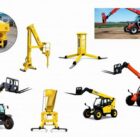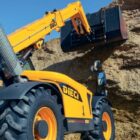


LPG gas is used not only in automotive transport, but also in forklifts. For this purpose, siphon cylinders are used, which are equipped with a dedicated valve that enables the extraction of liquid gas. Forklift control is also possible through a gas reducer, thanks to which the forklift can develop or reduce its power. It is precisely this element that is responsible for delivering the appropriate amount of gas that powers the forklift engine. A well-selected reducer ensures smooth machine operation and affects work efficiency in the warehouse.
What is the structure of a gas regulator for forklifts?
The LPG vaporizer for forklifts consists of several key elements. Their task is to enable free gas flow while protecting against gas leakage outside the drive system. These include:
- chamber – gas expansion occurs here, which is pre-filtered through a filter,
- membrane – maintains proper pressure values in the reducer. For this purpose, it uses a special spring,
- metal housing – is filled with coolant, thanks to which the proper temperature can be maintained in the reducer,
- inlet valve – receives gas at low pressure values,
- outlet valve – transfers gas from the reducer to the injectors.
Currently, the construction of vaporizers includes the fourth generation of reducers that use a membrane system. In reducer technology, there are also models that are completely devoid of membranes – these are piston reducers.
Gas reducer for forklifts – which parameters are most important?
Gas regulation in forklifts is selected for forklifts based on certain technical parameters. It is thanks to them that you can find out whether a given device is able to handle the gas installation in a given vehicle. Among these values, you can distinguish:
- gas pressure at the outlet – the most important value, affects the economical use of fuel in specific situations – e.g., when decreasing or increasing engine speed,
- gas throughput – this is the maximum amount of LPG that will be delivered from the siphon cylinder to the receiver.
Selecting the appropriate reducer in terms of the above parameters affects work safety while driving the forklift. Taking into account the technical aspects of the reducer, experts are guided not only by the vehicle’s power, but also by the efficiency of the tank in which LPG gas is stored.
What is the role of the reducer in forklifts?
The LPG vaporizer for forklifts can perform many functions. First of all, it converts the state of propane-butane from liquid to gaseous. Moreover:
- changes gas pressure,
- evaporates excess liquid in the system,
- delivers appropriate quality mixture to power the engine,
- protects against gas escape during forklift standstill.
Without a functioning reducer, a forklift with LPG installation will be useless. That’s why technical inspections and checking the efficiency of the gas regulator are so important. As with any component, it should be controlled according to information provided by the manufacturer. This can be done after the forklift has traveled a certain distance – e.g., every 30 thousand kilometers. It’s worth paying attention to the technical condition of the forklift and:
- engine type,
- type and construction of gas installation,
- quality of gas used,
- driving style.
How can you recognize a damaged reducer?
If gas regulation in the forklift is not working properly, this can be recognized by several key symptoms. They are signaled gradually as the reducer wears out. These include:
- sudden engine stalling,
- forklift slowdown under heavy load,
- coolant leak or gas escape.
The above symptoms result from the lack of gas supply, which is dosed by the worn-out reducer. In case of malfunctions, you should not repair the device yourself, but go to a specialist. With their help, you can effectively determine the cause of the problem and find a solution.